The other half of workplace culture

Back in April, I started a new learning course to become a Certified Consultant with the Emotional Culture Deck. It’s been a long time coming given it’s a tool I have used since 2019. And I co-convene the Sydney Chapter.
It’s been on my mind for some time. Whether or not to take the leap. I am reminded of the first time I saw and played with the cards, and the knowing that accompanied it.
Knowing that this was a wildly simple tool that could change so much.
And now I’m certifying because it felt like the right time, and there is also now an evidence platform to show the impact that this work can have.
The course means I’ve been revisiting some past learning and learning new things about emotional culture. Learning and relearning.
It’s been interesting though because I am already an advanced practitioner in one of the streams and have done a lot of learning with the cards. So, I’ve been taking the approach of having a learner mind and leaning into feeling #Curious. It helps that the platform and materials are constantly evolving too.
The first component we worked on was Self and the core Emotional Culture Crafting concept. After this one is Leadership, Change and Stakeholders.
We’ve all heard of workplace culture of course. What most people don’t realise is that what we talk about as being culture has two components, cognitive and emotional.
For those not familiar, we often talk about things that are cognitive culture. Think values, behaviours, purpose and meaning statements. I also think about the posters in office receptions. And Zoom backgrounds.
If culture is ‘the way we do things around here’ that alludes to more than the things we can see, experience and hear. Yet we talk less about emotional culture, ‘how people feel on Sunday night, before they come to work on Monday’. How people feel as they walk towards their desk on a Monday morning. How they need to feel to be successful.
The emotional side of culture is the part we often leave to chance or give less than a fleeting thought to. Yet it can be the most powerful, and it is certainly worth being deliberate about! Imagine the impact on absenteeism, presenteeism and productivity.
One of the moments that stuck with me from the learnings on this was the power of the practice that I have added as an image below. Good things. Listing three good things. “Describe three good things that happened today, or this week, and how you contributed to those things going well. Complete this exercise daily for it to have the biggest impact on your mental wellbeing.”
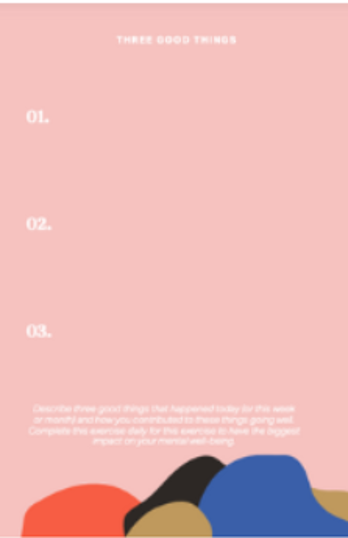
Why not give it a try? Attach this to a habit that you have got already and really lean in to completing the whole thing. Don’t gloss over it. Lean in.
This is a great foundational practice for our mental health and wellbeing. Like a gratitude practice: what am I grateful for? And the key is in the second step – why. I think the ‘good things and how you contributed’ originates from Marc Brackett’s work.
The other insight I had was identifying how I need to feel to be successful in my work.
I rarely choose #Love yet that was the first one that felt right. I need to love the work that I do, and I want to love the clients I work with. And I do – both. There is much to be #Grateful for in that!
This section of the program reminded me of how powerful the cards truly can be. There are so many ways that they can be used, with some that I played with being conversation guides, handbooks, and canvases in a workshop. Using them with others reminded me that I need to hold lightly to my views and my own thoughts. One of the tools simply didn’t resonate for me, yet the person I was trying it with got a lot out of it. Letting go of attachment and having a play is a powerful way to learn for me.
Part of the program includes delivering a workshop, which I did recently. I love hearing the insights and learnings, as well as ideas that people come up with. The energy in the room is palpable as people engage in conversations to more deeply get to know one another.
The one thing I have never heard in this workshop is:
‘Oh we’ve already been deliberate about designing our culture, no need to do this.’
This is the workshop that supports people to listen and learn about each other at a deeper level. Helps them identify what others need to be successful in their work, and what each other person can contribute to support that.

I am enjoying the learning and relearning and curious mind approach, and have another 6 months in the program, so stay tuned for other insights on Change, Stakeholder Management and Leadership.
I partner with riders&elephants to move & measure emotions that drive performance. For your people, your customers, and through every change & challenge. Learn more & download a free Lo-fi version of The Emotional Culture Deck at www.ridersandelephants.com/the-emotional-culture-deck


Comments